

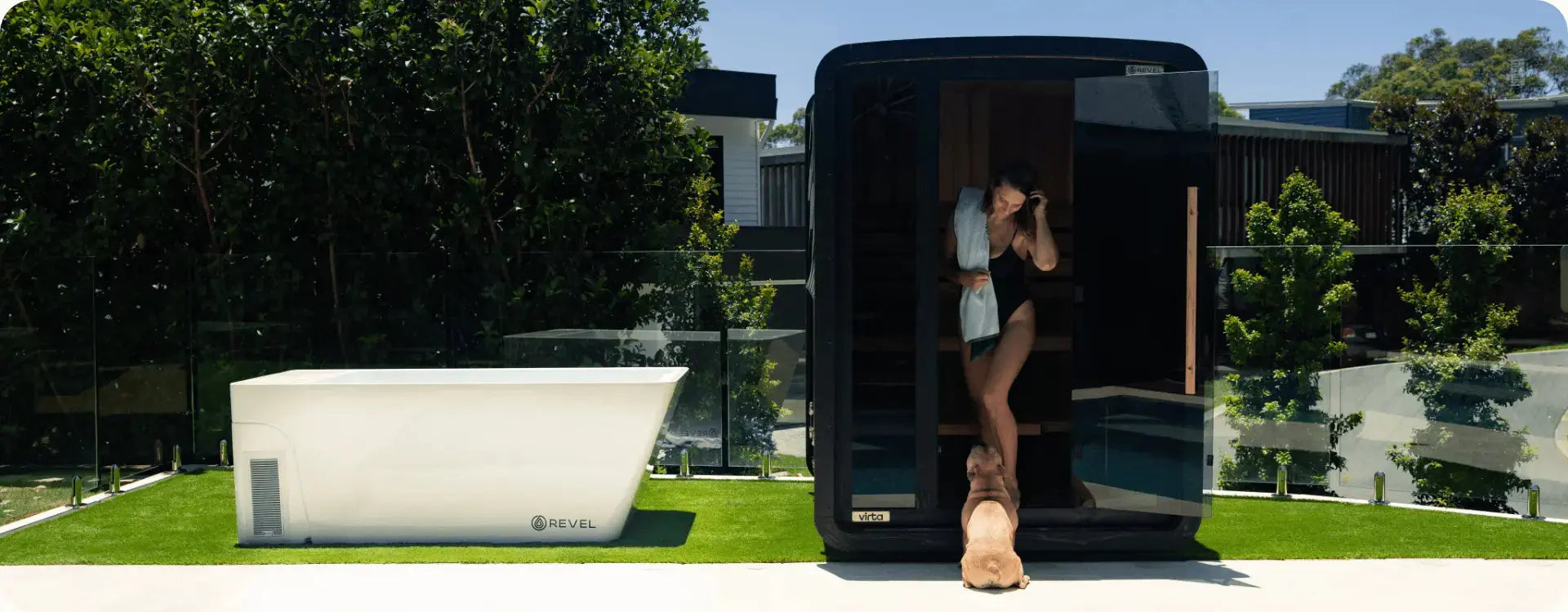
Let's be real with you. Installing a home sauna or ice bath is one of the best investments you can make in your wellness but it's not always as simple as choosing a product and booking a delivery date. There are real decisions to make, real costs to anticipate, and real mistakes that can turn a dream recovery space into a frustrating experience. We've been doing this for 20 years. We've seen every installation scenario from seamless plug in setups in home gyms to complex outdoor builds that required electricians, builders, and council liaison. This guide covers everything honestly, because we'd rather help you prepare than have you call us surprised.
Challenge 1: Power Requirements
This is the number one unexpected cost in home sauna installations. Infrared saunas in the 1 person range typically operate on a standard 15 amp household circuit the same circuit as your fridge or washing machine. If your indoor recovery space already has a standard power point, a single person Revel Aura can simply plug in. But larger infrared models and all traditional saunas require a dedicated 25 amp circuit. This means: A licensed electrician must install a new circuit from your switchboard to the sauna location. Cost typically ranges from $300 to $800 for a straightforward run, but can be significantly more if the cable needs to travel a long distance, pass through walls, or be buried underground. One Revel customer in Sydney noted in their review that burying the cable 60cm underground required cutting through a section of concrete driveway a cost they hadn't anticipated. It's a real scenario, and it's why we always recommend getting an electrical quote before you finalise your sauna location. What to do: Contact a licensed electrician before purchase. Tell them your intended sauna location and that you'll need a dedicated 25 amp circuit. Get a quote. Then factor that into your total budget.

Challenge 2: Space and Clearance Requirements
Saunas need more than just floor space. They need clearances. A traditional barrel sauna or cabin sauna needs to be placed on a level, load bearing surface concrete slab, hardwood deck, or pavers. It also needs clearance from walls, fences, and combustible structures. The specific requirements vary by product and local council regulations, but as a general rule, allow: A minimum of 30–50cm clearance on all sides for airflow and access A level surface within 5mm across the footprint of the sauna (important for door sealing and heater function) Overhead clearance of at least 30cm above the roofline if installing under an existing structure Infrared saunas have less demanding clearance requirements and can often be placed against a wall but they still need airflow behind the unit and adequate space for the door to swing open comfortably. A common mistake: buying a 4 person sauna for a space that's technically large enough, but forgetting to account for the door swing, the access pathway around it, and the visual weight of the unit in the space. Our sales team will help you map this out before purchase.

Challenge 3: Drainage and Water Management
Traditional saunas and ice baths both involve water whether it's steam, sweat runoff, or the maintenance drain on your ice bath. Traditional saunas: The floor of a Finnish sauna needs drainage. In outdoor installations, this can often drain to a gravel bed or garden. In indoor installations, you'll need a floor drain connected to a grey water outlet. This is a plumbing task, and it's worth doing properly a poorly drained sauna floor creates mould and timber damage over time. Ice baths: Most Revel ice baths drain via a standard garden hose fitting. Placement near a drain, a garden bed, or an outdoor area makes maintenance straightforward. A Revel Glacier or Edur needs to be drained and cleaned every 3–4 weeks (or treated with the appropriate water care kit, which extends intervals). If your planned location has no nearby drain, you'll be carrying a hose to the nearest garden edge each time manageable, but worth thinking through in advance. Chiller units also produce some condensation and heat exhaust. The chiller needs to be placed in an area with adequate ventilation not enclosed in a cabinet or tight corner.
Challenge 4: Council Approvals and Body Corporate
In most Australian states and territories, a free standing sauna under a certain size does not trigger a development application. But "most" is not "all," and there are nuances: Strata/body corporate properties: If you live in a unit, townhouse, or any property governed by a body corporate, you'll likely need written approval before installing any external structure. Some bodies corporate prohibit outdoor structures entirely. Heritage overlays: Properties with heritage overlays (common in inner city Melbourne and Sydney suburbs) may have restrictions on structures visible from the street, even small ones. Bushfire Attack Level (BAL) zones: In BAL rated areas, the construction materials and placement of any new structure including a sauna may need to comply with specific fire regulations. The practical step: Before purchasing an outdoor sauna, spend 15 minutes on your local council's website checking whether your zone has any additional requirements for Class 10a structures (outbuildings). If in doubt, our team has navigated these conversations with councils across the country and can advise on what questions to ask.

Challenge 5: Getting the Delivery and Assembly Right
Saunas are large, heavy, and come in sections that need to be assembled on site. A 4 person barrel sauna can weigh 300kg or more. If your installation location is: At the back of a long block: Consider how the sections will be moved from the delivery truck to the installation point. A two person carry through a side gate works for most units, but very large models may need equipment assistance. Up a flight of stairs: Possible, but requires planning and usually an additional pair of hands. Through a narrow gate or pathway: Check the dimensions of each section against your narrowest access point before ordering. Revel's delivery team will contact you before dispatch to discuss access specifics. We recommend having a clear, flat path from the street to the installation point and for large units a friend available on delivery day. Assembly is straightforward for most Revel products and does not require specialist tradespeople. Infrared saunas can typically be assembled in 60–90 minutes by two people using basic tools. Traditional saunas and barrel saunas take 2–4 hours depending on size. Full instructions are provided, and our team is available by phone during the process.
The Honest Bottom Line
None of these challenges are deal breakers. Hundreds of Australians install Revel saunas and ice baths every month and the process goes smoothly because they planned ahead. The three things that prevent 90% of installation surprises:
-
Get an electrical quote before you buy if you're purchasing a traditional sauna or a multi person infrared model.
-
Confirm your council zoning if you're installing an outdoor structure on a strata or heritage listed property.
-
Talk to our team before you finalise placement. We've seen every installation scenario, and a 10 minute conversation can save you significant time and money.
FAQs: Sauna and Ice Bath Installation in Australia
Does a home sauna need an electrician in Australia? Any sauna requiring a dedicated 25 amp circuit which includes all traditional saunas and most 2 person+ infrared models must have that circuit installed by a licensed electrician. This is non negotiable under Australian electrical safety law. Single person infrared saunas on a 15 amp circuit can plug into an existing household power point.
Can I install a sauna on a deck? Yes, provided the deck is structurally rated to handle the weight. A 4 person barrel sauna can exceed 300kg when assembled. Have a builder or structural engineer assess your deck's load capacity if you're unsure particularly for older or elevated decks.
How long does it take to set up a Revel sauna? Infrared saunas: 60–90 minutes for two people. Traditional/barrel saunas: 2–4 hours. All required assembly hardware is included. Most customers complete assembly without professional help. Revel's support team is available by phone during setup.
Do I need a plumber for a home ice bath? Not typically. Revel ice baths drain via a standard hose fitting and don't require permanent plumbing. If you're integrating an ice bath into a custom built wellness room with a floor drain, a plumber would be involved in the room build but not for the ice bath unit itself.
How much does it cost to install a home sauna in Australia (total)? Budget for the sauna purchase price plus $300–$800 for electrical (25 amp circuit, standard installation) and $0–$500 for any site preparation (levelling, pavers, or deck work). Most Revel customers complete the full installation for $500–$1,200 above the product cost. Complex installations with underground cabling or custom foundations cost more.
Revel in Wellness. Have a question about your specific installation? Our team is ready to help call 1800 849 284 or visit revelsaunas.com.au.

Share:
What Is the Best Infrared Sauna for Home Recovery Spaces?
Which Saunas and Ice Baths Suit Australian Homes Best?